
Knowing where your views come from is one of the most important steps in mastering YouTube analytics.
Traffic sources show how viewers discover your videos — whether through search, suggested videos, external websites, or the YouTube homepage.
By understanding these sources, you can identify what’s working, optimize your content strategy, and attract the kind of viewers who are more likely to subscribe and engage.
What Are YouTube Traffic Sources?
In YouTube Studio → Analytics → Reach tab, you’ll find a breakdown of where your views originate.
These are called traffic sources, and each one reflects a different viewer path.
YouTube groups them into categories such as:
- External sources
- Suggested videos
- Browse features
- YouTube search
- Channel pages, playlists, notifications, and direct links
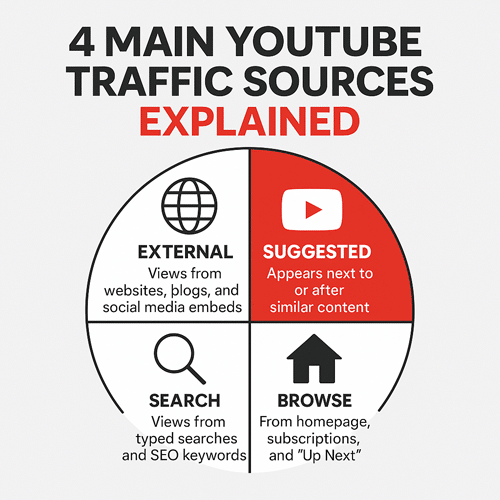
Let’s focus on the four most influential: External, Suggested, Browse, and Search.
1. External Traffic Sources
External traffic comes from outside YouTube — links shared on websites, social media, or embedded videos.
Common external sources include:
- Google Search
- Facebook, Reddit, X (Twitter), and LinkedIn posts
- Blog articles or press coverage
- Your own website or landing page
How to optimize:
- Embed videos on your website and relevant blog posts.
- Share clips strategically across social media platforms.
- Encourage others to link to your videos when discussing your topic.
Pro Tip:
If your channel targets product reviews or tutorials, external traffic often converts to high watch time and engagement — a strong signal for YouTube’s algorithm.
2. Suggested Videos
Suggested videos are the recommended thumbnails that appear on the right side of the watch page or after a video finishes.
They’re based on:
- Viewer watch history and interest
- Similar topics or channels
- High retention and engagement metrics
How to optimize:
- Use similar titles and keywords as top-performing videos in your niche.
- Add strong end screens and cards that link to your own related videos.
- Keep thumbnails and branding consistent across your uploads.
Algorithm insight:
If people watch your videos after viewing another creator’s, YouTube starts linking them together — dramatically increasing your visibility.
3. Browse Features
Browse features include the YouTube homepage, subscription feed, and “Up Next” section on mobile.
It’s where loyal audiences and returning viewers mostly come from.
Why it matters:
- These impressions are often your warm audience — people who already recognize your content.
- Consistent posting frequency increases the chance your videos appear in Browse.
How to optimize:
- Maintain a predictable upload schedule (e.g., same time each week).
- Create content series or playlists so viewers know what to expect.
- Use community posts and Stories to re-engage inactive subscribers.
4. YouTube Search
Search traffic comes from users typing keywords into YouTube’s search bar.
This is the most controllable traffic source — because it’s driven by SEO.
How to optimize:
- Research keywords with tools like vidIQ, TubeBuddy, or Google Trends.
- Include target phrases in your title, description, and first 100 characters of your video description.
- Add closed captions and natural keyword mentions in speech.
- Craft compelling thumbnails and clear titles that match user intent.
Bonus Tip:
Use long-tail keywords such as “how to edit videos in CapCut for YouTube Shorts” — these attract smaller but highly engaged audiences.
How These Sources Work Together
Each source supports the others:
- Search helps new viewers discover you.
- Suggested grows your visibility alongside similar creators.
- Browse nurtures returning subscribers.
- External builds authority beyond YouTube.
By diversifying traffic, your channel becomes less dependent on a single source — ensuring consistent growth even if algorithm trends change.
Advanced Strategy: Boost Initial Traffic
Buying high-retention YouTube views can help trigger these traffic systems earlier by giving your new videos the engagement they need to start appearing in Browse and Suggested sections.
Reliable providers like QQTube, CoinCrack, and Prodvigate deliver organic-style watch behavior that strengthens algorithm signals.
For details, read our full guide to the best websites to buy YouTube views in 2026.
This approach helps the algorithm gather data faster — but your long-term success still depends on retention, consistency, and genuine engagement.
Key Takeaways
- External: Share and embed to attract new viewers.
- Suggested: Build connections between your videos and related content.
- Browse: Stay consistent and engage your community.
- Search: Optimize keywords, titles, and metadata for discoverability.
The best channels don’t rely on just one traffic source — they master all four to build a stable foundation of views and algorithm trust.
Final Verdict: Diversify Your YouTube Traffic
Relying on just one traffic source is a common mistake among creators. The most successful YouTube channels build a healthy balance of Search, Suggested, Browse, and External traffic.
Each source plays a different role — Search brings new viewers, Suggested and Browse maintain growth momentum, and External links strengthen your visibility outside the platform.
Key takeaway: Optimize your videos for all four traffic paths. Combine SEO-driven uploads with consistent posting, smart interlinking, and external sharing to create a steady, algorithm-proof flow of views.
